
Fast Website
- Website Speed
- Website Performance
- Improve Website Speed
- Core Web Vitals
- Website Optimization
- Faster Website
- Website SEO
- Website Loading Speed
- Website Conversion
- Page Speed
How a Fast Website Can Increase Sales
Introduction
Imagine walking into a store where the lights take several seconds to turn on, the shelves are disorganized, and no one is available to help you. Chances are, you wouldn’t stay very long.
The same thing happens online.
Your website is often the first interaction potential customers have with your business. If it loads slowly, visitors don’t usually wait they leave. In many cases, they don’t come back. Instead, they click on a competitor’s website that responds faster and offers a smoother experience.
Many business owners think website speed is only a technical concern for developers. In reality, it’s a business issue. A slow website can reduce trust, increase bounce rates, lower your Google rankings, and ultimately cost you sales.
A fast website, on the other hand, creates a better first impression. It keeps visitors engaged, helps them find information quickly, and makes it easier for them to contact you or complete a purchase. That’s why improving website performance isn’t just about faster loading times it’s about creating a better customer experience and supporting business growth.
In this guide, you’ll learn how website speed influences SEO, user behavior, and conversions, along with practical ways to make your website faster and more effective.
Table of Contents
- Why Website Speed Matters
- The First Impression Happens in Seconds
- How Slow Websites Lose Customers
- Website Speed and Google Rankings
- The Connection Between Speed and Sales
- Common Causes of Slow Websites
- Practical Ways to Improve Performance
- Frequently Asked Questions
- Final Thoughts
Why Website Speed Matters
When someone visits your website, they expect information to appear almost instantly. Whether they’re searching for a service, comparing businesses, or shopping online, people have very little patience for delays.
A fast website makes visitors feel confident. Pages load smoothly, navigation feels effortless, and users can quickly find the information they’re looking for. This positive experience encourages them to stay longer and interact with your business.
A slow website creates the opposite effect. Even before reading a single word, visitors may assume your business is outdated or unreliable simply because the website doesn’t perform well.
Website speed influences much more than loading time. It affects how people perceive your brand, how long they stay on your site, and whether they decide to contact you or move on to a competitor.
The First Impression Happens in Seconds
Customer waiting for a slow website to load
Think about your own browsing habits.
When you click on a website and nothing happens for several seconds, what do you do?
Most people don’t wait. They close the page and try another result.
Your potential customers behave in exactly the same way.
Before they read about your services or view your portfolio, they’ve already formed an opinion based on how quickly your website responds. A slow-loading page creates frustration, while a fast website immediately feels more professional and trustworthy.
This first impression is incredibly important because trust begins long before someone fills out a contact form or makes a purchase.
Businesses spend thousands of dollars on advertising to attract visitors, but if the website loads slowly, much of that investment is wasted because visitors leave before becoming customers.
How Slow Websites Lose Customers
Website visitor leaving due to slow page loading
Every visitor who lands on your website represents a potential opportunity. Some are ready to buy, while others are researching before making a decision. Regardless of where they are in the buying journey, they all expect a smooth online experience.
A slow website interrupts that experience.
Instead of exploring your services, visitors become focused on the delay. Some refresh the page, while others simply leave. Once they’re gone, there’s no guarantee they’ll return.
This doesn’t just affect online stores. Service-based businesses, agencies, consultants, restaurants, healthcare providers, and local companies all lose potential customers when their websites perform poorly.
Improving website speed removes unnecessary friction from the customer journey. It allows visitors to focus on what really matters—learning about your business and deciding whether you’re the right choice for them.
How Website Speed Affects 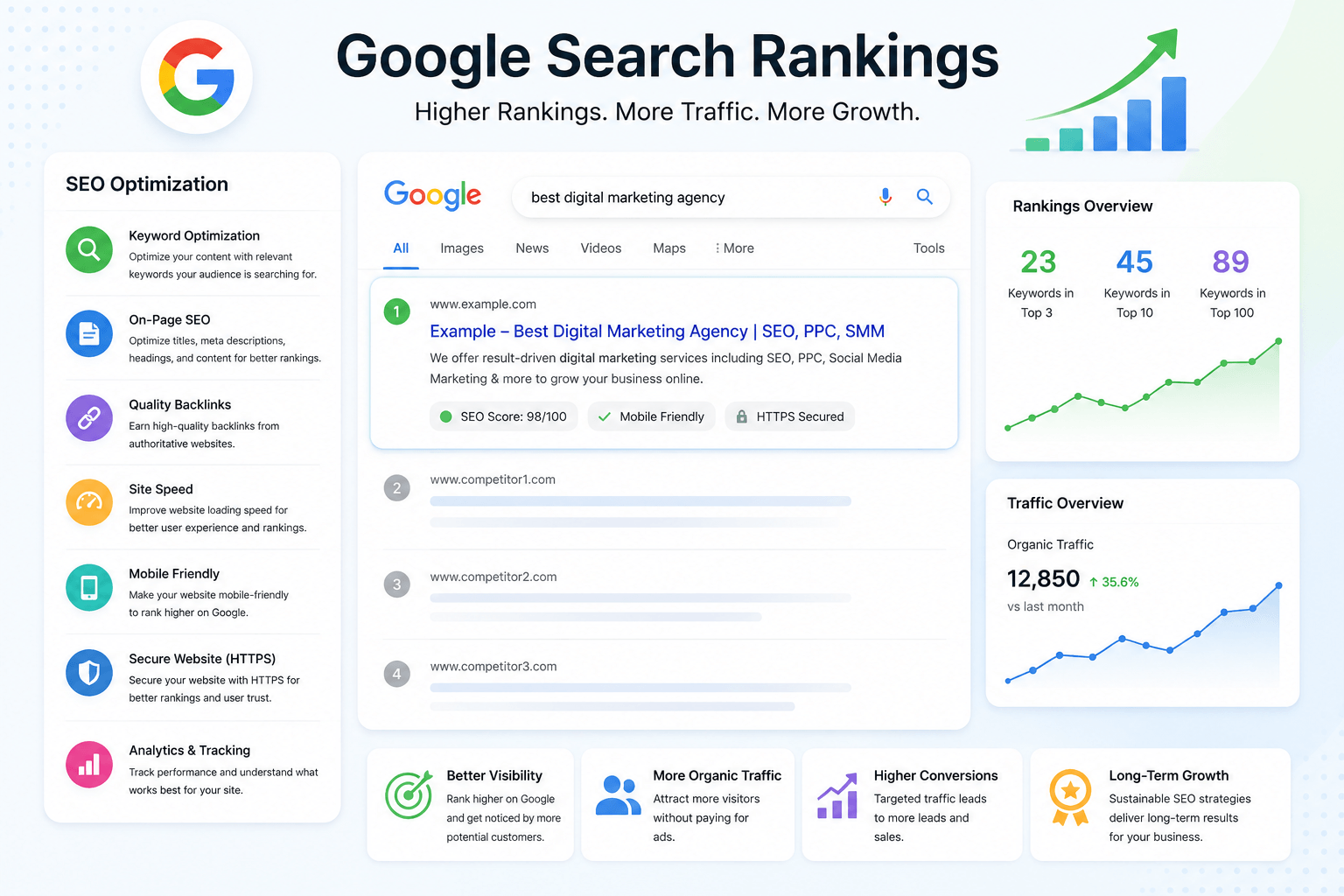
Google Rankings
A beautiful website won’t help your business if people can’t find it.
Google’s goal is simple: provide users with the best possible experience. If your website is slow, difficult to use, or frustrating on mobile devices, Google is less likely to recommend it in search results.
Website speed has become an important ranking signal because it directly affects user satisfaction. When pages load quickly, visitors stay longer, explore more content, and are more likely to complete an action. Those positive signals tell search engines that your website provides value.
On the other hand, if visitors leave only a few seconds after arriving, search engines may interpret that as a poor user experience.
This doesn’t mean speed is the only factor that determines rankings. Quality content, backlinks, and SEO optimization all matter. However, even excellent content can struggle to perform if the website itself is slow.
That’s why improving website performance should be part of every long-term SEO strategy.
Faster Websites Create Better Customer Experiences
Imagine you’re looking for a web development agency.
You open two different websites.
The first website loads instantly. Everything feels smooth. Navigation is simple, images appear immediately, and finding information takes only a few seconds.
The second website keeps loading. Images appear one by one, scrolling feels slow, and every click requires more waiting.
Even if both companies offer the same quality of service, most people will naturally trust the first one more.
Speed creates confidence.
Visitors rarely think, “This website loads in two seconds.”
Instead, they simply feel that the business is professional, reliable, and modern.
Great user experience often goes unnoticed because everything works exactly as expected.
Poor user experience is impossible to ignore.
The Connection Between Website Speed and Sales
Every extra second a visitor spends waiting gives them another reason to leave.
Now imagine your website receives one thousand visitors every month.
If only a small percentage leave because your pages load too slowly, that’s dozens of potential customers who never read about your services, never contact you, and never become paying clients.
Improving website speed doesn’t magically increase sales overnight.
What it does is remove unnecessary barriers between your business and your customers.
When people can browse comfortably, trust your website, and quickly find what they need, they’re far more likely to request a quote, schedule a consultation, or complete a purchase.
That’s why website speed should be viewed as an investment in customer experience rather than just another technical improvement.
Why Websites Become Slow Over Time
Most websites aren’t slow because of a single problem.
Instead, performance gradually declines as small issues build up over time.
Perhaps large images were uploaded without compression. New plugins were installed without removing old ones. The website theme became outdated, or the hosting company could no longer keep up with increasing traffic.
Sometimes businesses redesign parts of their website several times without cleaning unnecessary code left behind by previous developers.
Individually these issues may seem minor.
Together, they can significantly increase loading times.
The good news is that most performance problems can be identified and fixed without rebuilding the entire website.
Practical Ways to Improve Website Speed
Improving website performance doesn’t always require expensive software or major redesigns.
Often, a few smart improvements can make a noticeable difference.
Start by optimizing your images before uploading them. Large image files are one of the most common reasons websites become slow. Modern formats such as WebP provide excellent quality while keeping file sizes much smaller.
Choosing reliable hosting is equally important. Even a perfectly designed website will struggle if it’s running on slow or overloaded servers.
Regularly reviewing installed plugins also helps. Every unnecessary plugin adds extra work for your website, so keeping only the tools you actually use improves both speed and security.
Caching, browser optimization, code minification, and a lightweight website design all contribute to faster loading times.
The goal isn’t simply to achieve a perfect score in a testing tool. The real goal is creating a website that feels fast for every visitor.
A Real Business Perspective
Imagine two local businesses offering the same service in the same city.
Both invest in marketing.
Both have professional teams.
Both offer competitive prices.
The difference is their website.
One loads almost instantly, making it easy for visitors to browse services and request a quote.
The other feels slow and outdated.
Over time, the faster website naturally keeps more visitors engaged, generates more inquiries, and builds greater trust.
Small improvements repeated hundreds or thousands of times eventually create a significant difference in business growth.
Website speed may seem like a technical detail, but its impact is felt throughout the entire customer journey.
Frequently Asked Questions
What is considered a fast website?
While there’s no single number that guarantees success, a good website should feel almost instant to visitors. Pages that load quickly create a better experience, keep users engaged, and are more likely to perform well in search results. The faster your website responds, the easier it is for customers to interact with your business.
Does website speed really affect SEO?
Yes, website speed plays an important role in search engine optimization. Google wants to provide users with websites that are fast, reliable, and easy to use. Although speed is only one ranking factor among many, improving performance can strengthen your overall SEO strategy and create a better experience for your visitors.
Why is my WordPress website slow?
There isn’t always a single cause. In many cases, slow websites are the result of several small issues combined, such as oversized images, low-quality hosting, outdated themes, unnecessary plugins, or a lack of caching. A proper speed audit usually identifies the biggest opportunities for improvement.
How often should website performance be checked?
Website performance should be reviewed regularly, especially after installing new plugins, updating your theme, or adding large amounts of content. A website that was fast a year ago may gradually slow down as it grows, making routine optimization an important part of long-term maintenance.
Is website speed important for service-based businesses?
Absolutely. Whether you run a law firm, restaurant, construction company, digital agency, or local business, your website is often the first interaction customers have with your brand. A fast website builds confidence, encourages visitors to stay longer, and increases the likelihood that they’ll contact you.
Final Thoughts
Your website doesn’t need to be filled with flashy animations or complicated features to impress visitors.
What people remember is how your website made them feel.
If every page loads quickly, navigation is smooth, and information is easy to find, visitors naturally develop confidence in your business. That confidence often becomes the first step toward an inquiry, a phone call, or a sale.
On the other hand, a slow website creates unnecessary friction. Even if you provide excellent products or services, visitors may never stay long enough to discover what makes your business different.
Improving website speed isn’t just about achieving a better performance score. It’s about respecting your visitors’ time, creating a better experience, and giving your business every opportunity to grow.
When your website performs well, everything else becomes more effective. Your SEO efforts work harder, your marketing campaigns deliver better results, and your visitors are more likely to become loyal customers.
Ready to Speed Up Your Website?
If your website feels slow, outdated, or isn’t generating the results you expected, now is the perfect time to improve it.
At DevNest Web Solutions, we help businesses build websites that are not only visually professional but also optimized for speed, SEO, and user experience.
Whether you need a complete website performance audit, WordPress speed optimization, or a modern website built from the ground up, we’ll help you create a faster online experience for your customers.
Our focus is simple:
Build websites that load faster, rank better, and convert more visitors into customers.
If you’re ready to give your business a website that reflects the quality of your services, contact DevNest Web Solutions today for a free consultation.
- 10 Signs Your Business Needs a New Website
- How a Fast Website Can Increase Sales
- SEO Checklist for Small Businesses